Development as Freedom
0.0
( 0 )
Engelsk

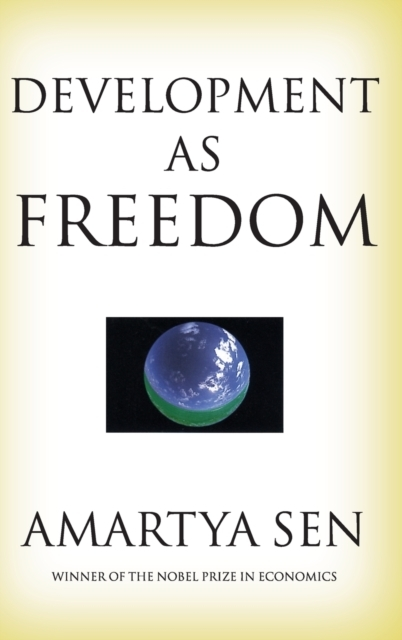

In Development as Freedom Amartya Sen quotes the eighteenth century poet William Cowper on freedom: Freedom has a thousand charms to show, That slaves howe''er contented, never know. Sen explains how ...
På lager i 0 butikker.
Forlagsbeskrivelse af Development as Freedom af Amartya Sen
In Development as Freedom Amartya Sen quotes the eighteenth century poet William Cowper on freedom: Freedom has a thousand charms to show, That slaves howe''er contented, never know. Sen explains how in a world of unprecedented increase in overall opulence, millions of people living in rich and poor countries are still unfree. Even if they are not technically slaves, they are denied elementary freedom and remain imprisoned in one way or another by economic poverty, social deprivation, political tyranny or cultural authoritarianism. The main purpose of development is to spread freedom and its ''thousand charms'' to the unfree citizens. Freedom, Sen persuasively argues, is at once the ultimate goal of social and economic arrangements and the most efficient means of realizing general welfare. Social institutions like markets, political parties, legislatures, the judiciary, and the media contribute to development by enhancing individual freedom and are in turn sustained by social values. Values, institutions, development, and freedom are all closely interrelated, and Sen links them together in an elegant analytical framework. By asking "What is the relation between our collective economic wealth and our individual ability to live as we would like?" and by incorporating individual freedom as a social commitment into his analysis, Sen allows economics once again, as it did in the time of Adam Smith, to address the social basis of individual well-being and freedom. In Development as Freedom Amartya Sen quotes the eighteenth century poet William Cowper on freedom: Freedom has a thousand charms to show, That slaves howe''er contented, never know. Sen explains how in a world of unprecedented increase in overall opulence, millions of people living in rich and poor countries are still unfree. Even if they are not technically slaves, they are denied elementary freedom and remain imprisoned in one way or another by economic poverty, social deprivation, political tyranny or cultural authoritarianism. The main purpose of development is to spread freedom and its ''thousand charms'' to the unfree citizens. Freedom, Sen persuasively argues, is at once the ultimate goal of social and economic arrangements and the most efficient means of realizing general welfare. Social institutions like markets, political parties, legislatures, the judiciary, and the media contribute to development by enhancing individual freedom and are in turn sustained by social values. Values, institutions, development, and freedom are all closely interrelated, and Sen links them together in an elegant analytical framework. By asking "What is the relation between our collective economic wealth and our individual ability to live as we would like?" and by incorporating individual freedom as a social commitment into his analysis, Sen allows economics once again, as it did in the time of Adam Smith, to address the social basis of individual well-being and freedom.
Detaljer
Forlag
Oxford University Press
ISBN
9780198297581
Sprog
Engelsk
Sider
384
Udgivelsesdato
14-10-1999
Format
Hardback
Varenr.
2121281
EAN nr.
9780198297581
Varegruppe
Engelsk non fiction div.
Højde/Dybde (mm)
26
Bredde (mm)
166
Længde (mm)
243
Vægt (g)
738